Why SEO Is More Important Than Ever in the AI Era?
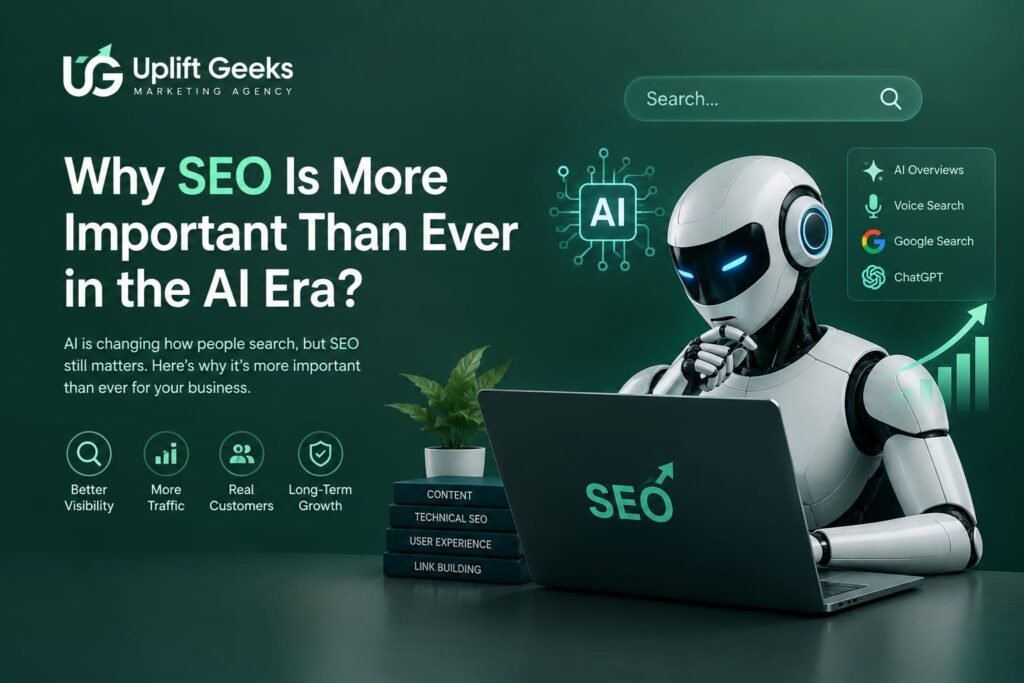
Artificial intelligence is changing the way people search for information, discover businesses, and make purchasing decisions. Instead of typing a few words into a search engine, users can now ask detailed questions and receive answers almost instantly.
This shift has led many businesses to ask an important question: Does SEO still matter in the age of AI?
The answer is yes.
Search engine optimization is evolving alongside new search technologies, but the fundamentals remain important. Businesses still need websites that search engines can understand, pages that answer users’ questions, and content that provides genuine value.
In fact, as online search becomes more competitive and conversational, having a strong SEO strategy can help businesses maintain their visibility and reach people who are actively looking for their products or services.
In this guide, we’ll explore why SEO remains important in the AI era and what businesses should focus on to build sustainable online visibility.
What Is Changing in Search Because of AI?
AI is making search more conversational and interactive.
In the past, someone looking for a digital marketing agency might search for:
“digital marketing agency in Multan”
Today, that same person might ask:
“How can a small business in Pakistan get more customers through Google without spending too much on advertising?”
The second type of search is much more specific and reflects a real problem the user wants to solve.
AI-powered search experiences can also provide information from multiple sources, summarize topics, and help users explore questions through follow-up queries.
This means businesses should not focus only on adding exact-match keywords to their pages. They should focus on understanding search intent and creating content that provides clear, useful answers.
What This Means for Businesses
A modern SEO strategy should consider:
- The questions customers are asking
- The problems they are trying to solve
- The information they need before making a decision
- The quality and usefulness of the website
- How different pages are connected
- Whether search engines can properly access and understand the content
SEO is becoming less about simply targeting phrases and more about building a useful online resource for your audience.
A visually attractive website is important for visitors, but design alone does not explain your business to search engines.
Your website should have a clear structure that makes it easy to understand what you offer.
For example, a digital marketing agency may have separate pages for:
- SEO Services
- Google Ads
- Meta Ads
- Social Media Marketing
- Content Marketing
- WordPress Development
Each service should have its own useful and focused page.
These pages should also be connected logically through navigation and internal links. This helps visitors discover related information while giving search engines a clearer understanding of the relationship between different pages.
A well-organized website can therefore support both user experience and SEO.
Why Website Structure Matters
Imagine a website where every service, blog post, and important page is disconnected.
Visitors may struggle to find what they need, while search engines may have a harder time understanding which pages are most important.
A logical structure creates a clear path:
Homepage → Services → Individual Service → Related Blog Content
This approach can make your website easier to navigate and easier to understand.
Helpful Content Matters More Than Keyword Stuffing
One of the biggest mistakes businesses can make is writing content simply to include a keyword as many times as possible.
Search engines have become much better at understanding language and context.
For example, if your target topic is SEO in the AI era, you don’t need to repeat that exact phrase in every paragraph.
Instead, you can naturally discuss related concepts such as:
- AI-powered search
- organic visibility
- search intent
- search engine optimization
- helpful content
- technical SEO
- website visibility
The goal is to create an article that answers the reader’s question naturally.
Write for People First
Before publishing an article, ask:
Does this content actually help the person who searched for this topic?
If the answer is yes, you’re moving in the right direction.
Good SEO content should be:
- Easy to understand
- Relevant to the topic
- Well organized
- Original and useful
- Written for a specific audience
- Supported by practical examples where appropriate
Keywords should help search engines understand the subject, but they should never make the article uncomfortable or repetitive to read.
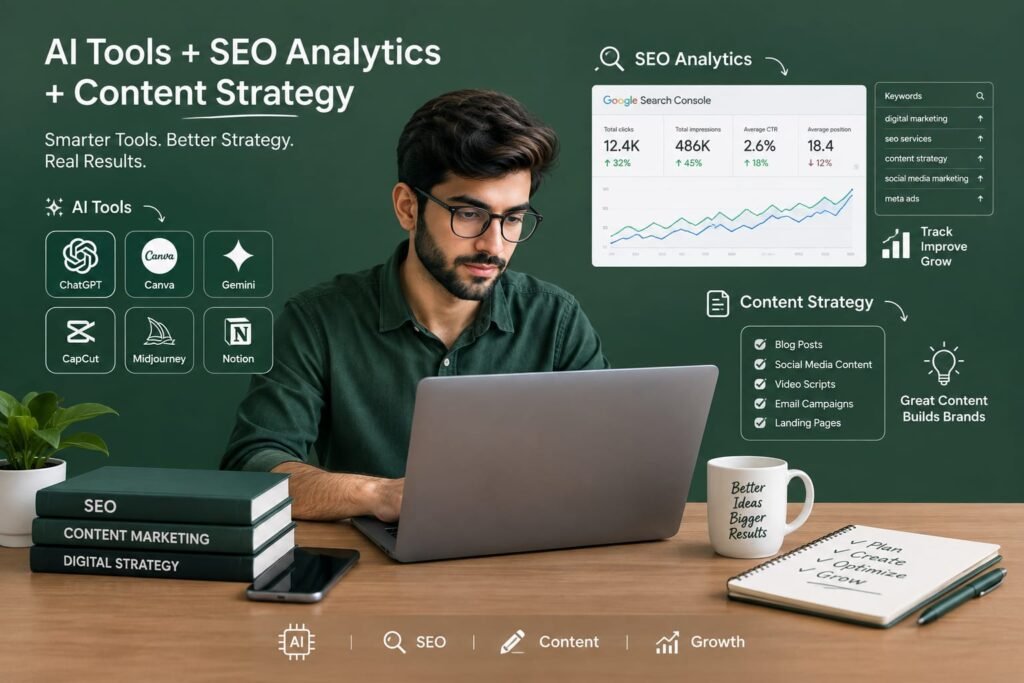
AI tools can make content production faster.
Businesses can use AI to brainstorm ideas, create outlines, organize research, improve drafts, and identify possible content topics.
However, producing content quickly is not the same as producing valuable content.
A website filled with generic articles that provide little new information may not give users a reason to trust the business or return to the website.
Human experience is still valuable.
For example, a digital marketing agency can make its content more useful by including:
- Real campaign examples
- Practical SEO processes
- Original insights
- Screenshots
- Case studies
- Common mistakes
- Lessons learned from projects
- Step-by-step recommendations
This type of information can make content more relevant and useful than a generic article covering the same subject.
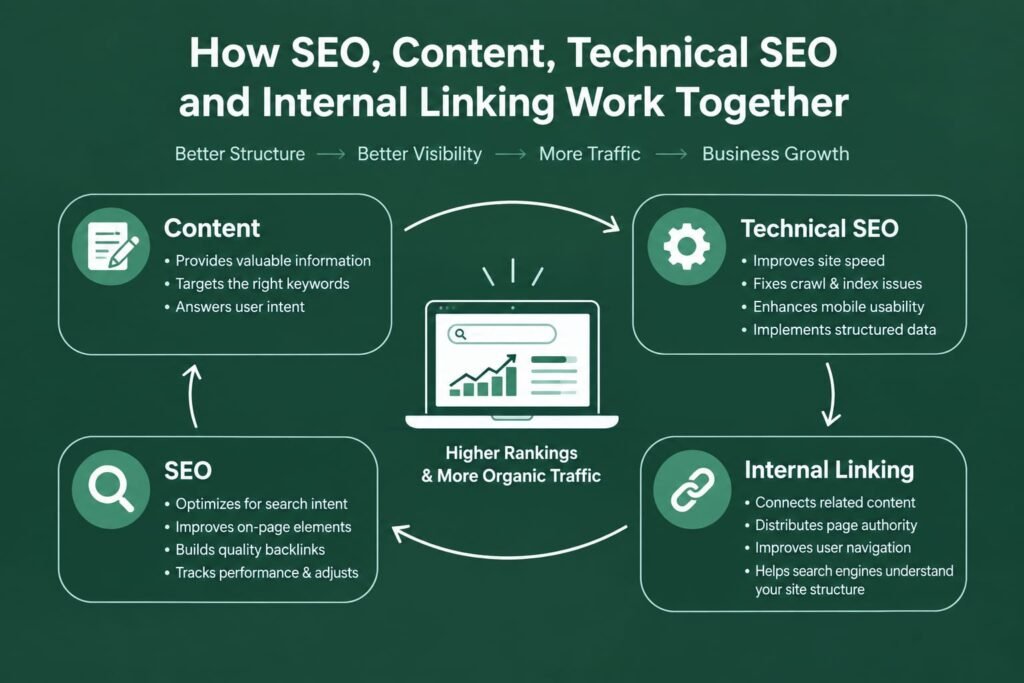
Creating useful content is only one part of SEO.
Your website also needs a strong technical foundation.
Important areas include:
Mobile-Friendly Design
A website should work properly across smartphones, tablets, and desktop computers.
Page Speed
Slow pages can create a poor experience for visitors. Improving loading performance can help create a smoother website experience.
Crawlability
Search engines need to be able to access important pages on your website.
Indexing
Important pages should be properly available for search engine indexing.
Clear URLs
Simple, descriptive URLs can make your website structure easier to understand.
Internal Linking
Related pages should be connected naturally so users and search engines can discover relevant content.
HTTPS
A secure website is an essential part of a professional web presence.
Structured Data
Where appropriate, structured data can help search engines understand specific types of information on a page.
Technical SEO may not always be visible to visitors, but it provides the foundation on which your content and search visibility depend.
Internal Linking Makes Your Website Stronger
Publishing useful blog posts is valuable, but those articles should not exist as isolated pages.
Internal links connect related content across your website.
For example, this article discusses SEO. You can naturally connect it to your SEO service page.
You can also connect articles about paid advertising to your Meta Ads service, while WordPress-related content can point visitors toward your WordPress Development service.
This creates a connected content ecosystem.
SEO Helps Build Long-Term Organic Visibility
One reason businesses invest in SEO is that useful content can continue attracting visitors after publication.
Paid advertising can provide immediate exposure while a campaign is running, whereas organic search visibility is built through content, website quality, authority, and technical optimization over time.
For example, imagine a company publishes a detailed article answering a common question that potential customers search for every month.
If that article provides a genuinely useful answer and performs well in search, it can continue bringing relevant visitors to the website.
Those visitors may then:
- Read another blog post
- Explore a service
- Visit the contact page
- Subscribe to an email list
- Request a quotation
This is why SEO should be viewed as part of a broader digital marketing strategy rather than simply a way to add keywords to a website.
Search Visibility Is Becoming More Diverse
Search is no longer limited to a traditional page of blue links.
People can discover information through different search experiences, including traditional search results, featured results, images, videos, local results, and AI-powered search features.
Because of this, businesses should think about their overall online presence rather than optimizing a single page for one keyword.
Useful content can take different forms:
- Blog articles
- Service pages
- Guides
- Videos
- Images
- FAQs
- Case studies
- Original research
The important thing is that each piece of content should serve a real purpose for the audience.
Original Experience Can Make Your Content More Valuable
There are already countless articles online about basic SEO topics.
So simply publishing another generic explanation may not be enough to stand out.
Businesses can make their content more useful by adding information that comes from their own experience.
For example, instead of only explaining how SEO works, you could show:
- How you approach an SEO project
- Common problems you’ve encountered
- Before-and-after examples
- Practical optimization processes
- Lessons from campaigns
- Real screenshots
- Case studies
- Frequently asked customer questions
This gives readers something they may not find in hundreds of similar articles.
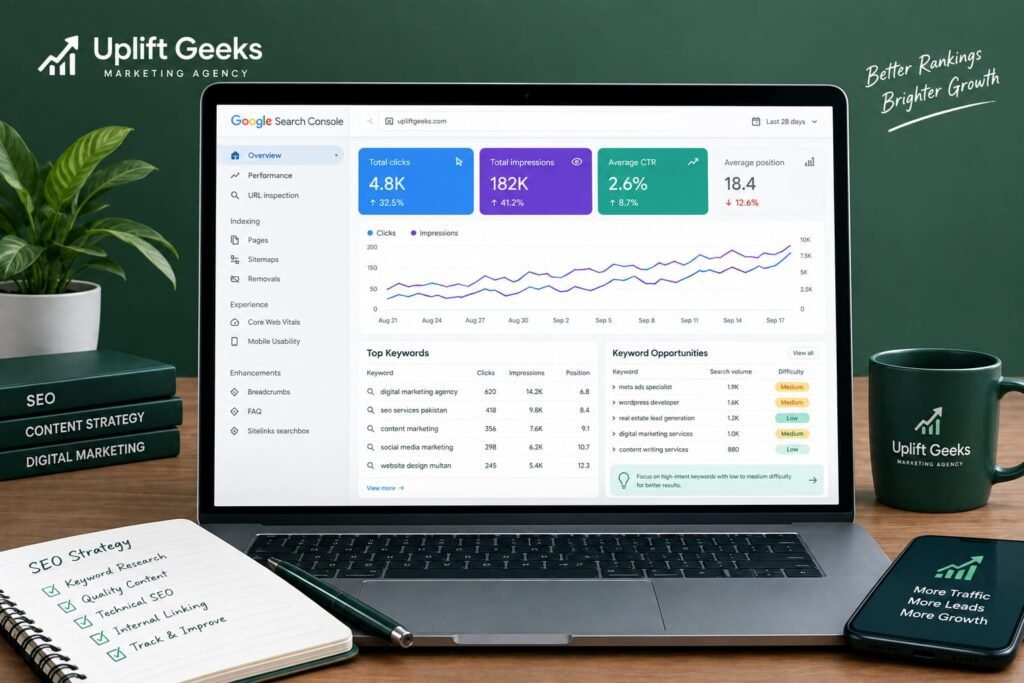
How Businesses Should Approach SEO in the AI Era
Businesses don’t need to chase every new AI or SEO trend.
Instead, focus on fundamentals that continue to provide value.
Create Useful Content
Write about questions your potential customers actually ask.
Understand Search Intent
Think about what someone wants to accomplish when they perform a search.
Keep Your Website Technically Healthy
Make sure important pages are accessible, mobile-friendly, fast, and properly structured.
Build a Logical Website Structure
Connect related service pages, blog posts, and important website sections.
Use Keywords Naturally
Include relevant terms where they make sense instead of forcing them into every paragraph.
Add Original Value
Share experience, examples, research, case studies, and practical insights.
Monitor Your Performance
Use Google Search Console and analytics tools to understand which pages attract visitors and where improvements may be needed.
SEO is not a one-time task. Search behavior changes, competitors publish new content, and websites evolve. Regular monitoring helps you identify opportunities and problems.
SEO and AI Can Work Together
SEO and AI don’t have to be competitors.
Businesses can use AI as a productivity tool while keeping human judgment at the center of their content strategy.
A practical workflow could look like this:
Research → Content Outline → Draft → Human Review → Add Original Insights → SEO Optimization → Publish → Monitor
AI can help speed up parts of this process, but the final content should provide something useful to the audience.
The objective should not be to publish the largest possible number of articles.
The objective should be to build a website that people find useful and that clearly demonstrates what your business knows and offers.
Final Thoughts: Why SEO Still Matters
AI is changing how people discover information, but it has not removed the need for strong websites and useful content.
Businesses still need to be discoverable.
They still need pages that answer customer questions.
They still need technically accessible websites.
And they still need a clear way to communicate their products, services, expertise, and experience.
The future of SEO is therefore not simply about repeating keywords.
It is about understanding your audience, creating useful information, maintaining a technically healthy website, and building a connected online presence.
AI may continue to change the search experience, but businesses that focus on usefulness, relevance, technical quality, and genuine value can continue adapting as the digital landscape evolves.
Want to Improve Your Online Visibility?
At Uplift Geeks, we help businesses build their online presence through SEO, digital marketing, paid advertising, and website solutions.
If you’re looking to improve your website’s visibility and attract more relevant visitors, explore our digital marketing services to learn more about how we can support your online growth.